
Text: Ana Maria März
In action
Setting up a space pharmacy
Pakistani biotechnologist Dr Imran Khan is exploring ways to protect astronauts from diseases in space. His research could soon be used on the International Space Station.
Issue 1 | 2026
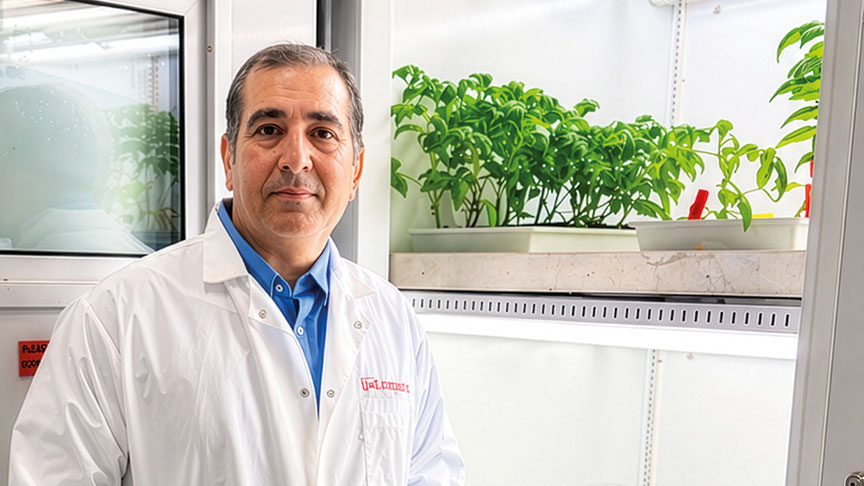
If ever offered the chance to go into space himself, Dr Imran Khan wouldn’t hesitate to seize the opportunity. Before embarking on his research career, the biotechnologist had dreamt of becoming a pilot. Though it’s not very likely that he will actually take part in a space flight himself, his research could well be heading for the stars before too long.
“One of the biggest challenges astronauts face is the loss of bone density in conditions of low gravity,” says Khan. Drugs currently produced on Earth have only a short shelf life, however. At NASA’s Center for the Utilization of Biological Engineering in Space (CUBES), Khan worked on a rather special project that involved cultivating genetically modified plants to produce a hormone that counters the process of bone atrophy. “This is the first research study at a NASA facility to demonstrate the benefits of genetically manipulated plants when it comes to supporting human health on multi-year missions in space,” says Khan. The approach could soon be put to the test on the International Space Station (ISS). “Astronauts could take genetically modified seeds with them into space, grow plants such as lettuce during the mission and either eat them directly or if necessary extract their therapeutic substances,” says Khan, explaining the NASA project.
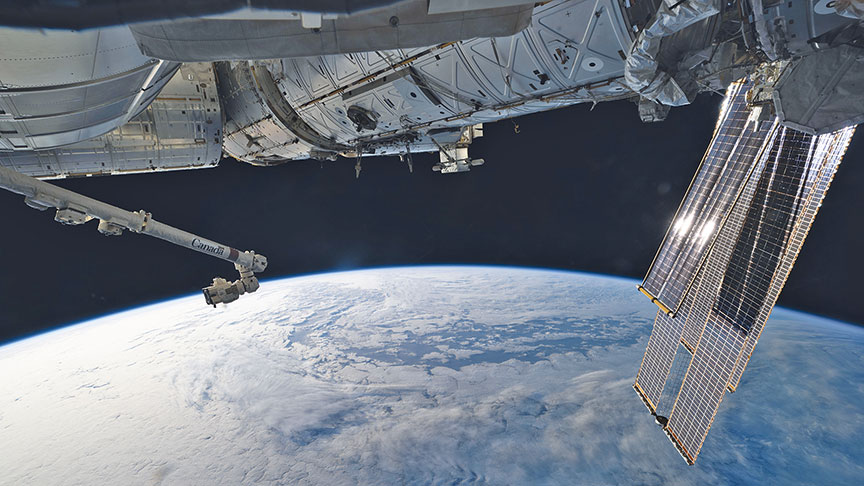
He sees its success as being rooted to some extent in interdisciplinary work – an approach he internalised during his time as a DAAD scholarship holder in Germany. “I have the DAAD to thank for much of my professional development,” says Khan, who did his PhD on a scholarship at RWTH Aachen University’s Institute of Molecular Biotechnology. Together with the University of Bonn, he then established a research centre at the International Islamic University Islamabad with funding from the DAAD’s German-Pakistani Research Collaboration programme. Subsequently, he worked in the USA, researching how to use plants to produce biopharmaceuticals, in particular by encapsulating them in plant cells. This led him to NASA’s research project. As a scientist, he sees this as a contribution to setting up a kind of “space pharmacy”. “This research could support human missions to Mars and usher in a new era in space research.” Khan now heads a team at Cornell University in New York that is researching cells that could produce vaccines, antibodies or enzymes. —