
Text: Miriam Hoffmeyer
In action
Shaping tomorrow’s space research
Aerospace engineer Julia Stankiewicz is a trainee at ESA’s most important technical facility and has also conducted research at NASA. In 2025, the DAAD alumna launched a scholarship programme for Polish students with a passion for space.
Issue 1 | 2026
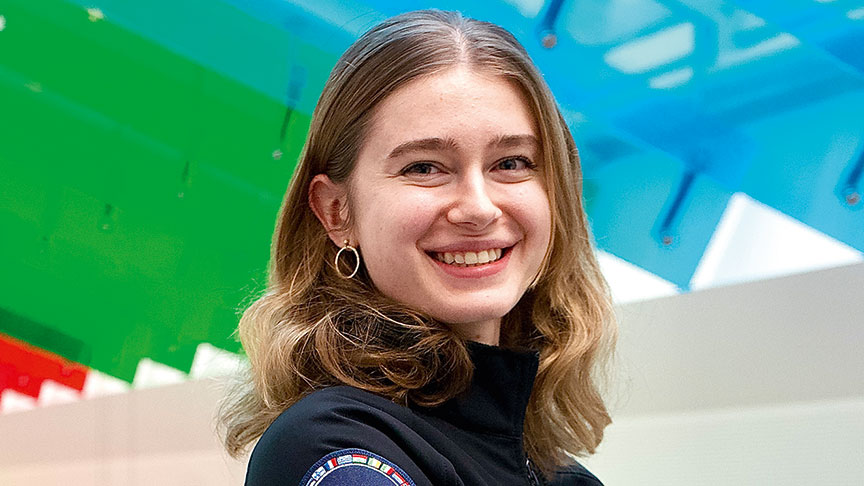
Julia Stankiewicz doesn’t have much spare time. She’s just wrapping up her work at the European Space Agency (ESA) before embarking on her next steps. Since September 2024, the aerospace engineer from Poland has been a trainee at the European Space Research and Technology Centre (ESTEC) in Noordwijk in the Netherlands, ESA’s most important technical facility. She was also involved in the Lunar Gateway project, planning a space station for lunar orbit: “I coordinated the companies developing the components for the space station, which taught me a lot about project management. But what I enjoy most is hands-on engineering: I’ve always loved designing and repairing things.”
She’s been fascinated by space technology ever since childhood, when she and her father would watch documentary films about the Hubble space telescope at home in Gdańsk. Attracted by the idea of English university life, Stankiewicz chose to do her BSc at the University of Manchester. So far, she has studied and researched in six different countries. “This was partly thanks to a summer job working at a garden centre in Berlin in 2016,” explains the 30-year-old. “As a result, I not only fell in love with German culture – I also realised how exciting it is to discover new countries.” A year later, the DAAD made it possible for her to take an intensive German course in Munich: “After that, I had it in the back of my mind to go to Germany for a longer period.”
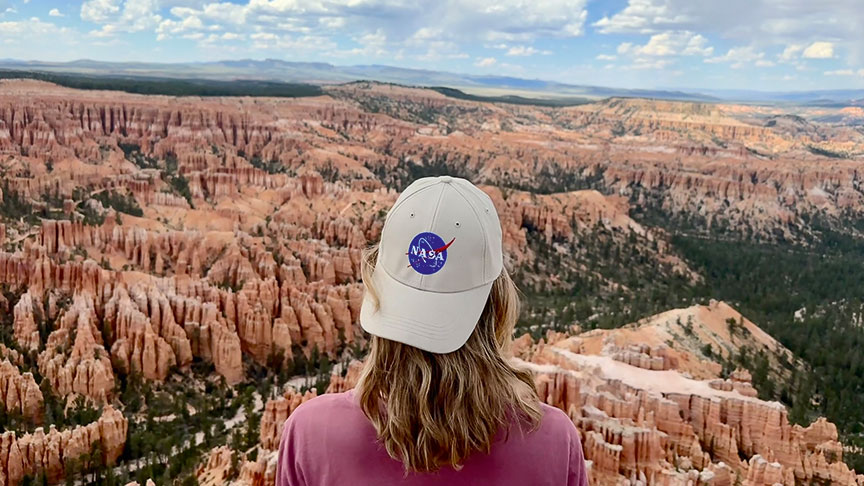
“Gazing into the immeasurable vastness of the universe makes me realise just how much humanity has yet to discover. That’s what keeps me going.”
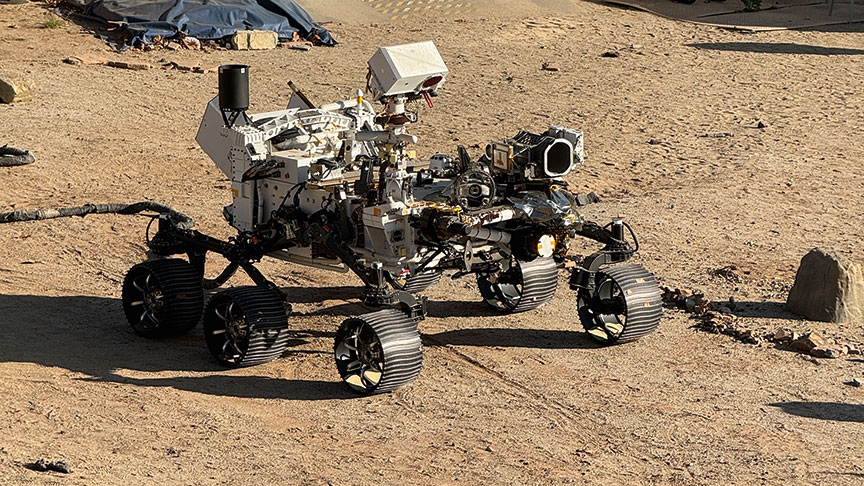
Julia Stankiewicz did her master’s at the Technical University of Munich (TUM) on a DAAD graduate scholarship. She particularly liked the international and practical aspects of the MSc in Aerospace Engineering and the opportunities it provided to go abroad and gain practical work experience. By the time she graduated in 2024, she had spent not only one semester studying at the Sorbonne in Paris but a total of nearly two years working and researching at space companies and organisations. For her, the most important of these was a research placement in 2023/2024 at NASA’s Jet Propulsion Laboratory (JPL) in Pasadena, California. It required a great deal of persistence to overcome all the academic and bureaucratic hurdles that non-US students face. For example, she had to find sponsors on her own who would help pay her high living costs during her stay. A small part of this was covered by a DAAD PROMOS scholarship: “The DAAD was the first to say yes, which gave me the confidence that I could do it.”
In Pasadena, Julia Stankiewicz programmed a tool for analysing satellite data that can be used to monitor natural disasters such as forest fires or floods. A second project involved designing a rig for drilling into specific rock samples. “Similar rock formations are believed to exist on Mars,” she explains. By around 2040, the samples that are currently being collected by NASA’s Perseverance Mars rover will be brought back to Earth and analysed. “An enormous amount is happening in space exploration just now. I find it inspiring that I can contribute to this.”
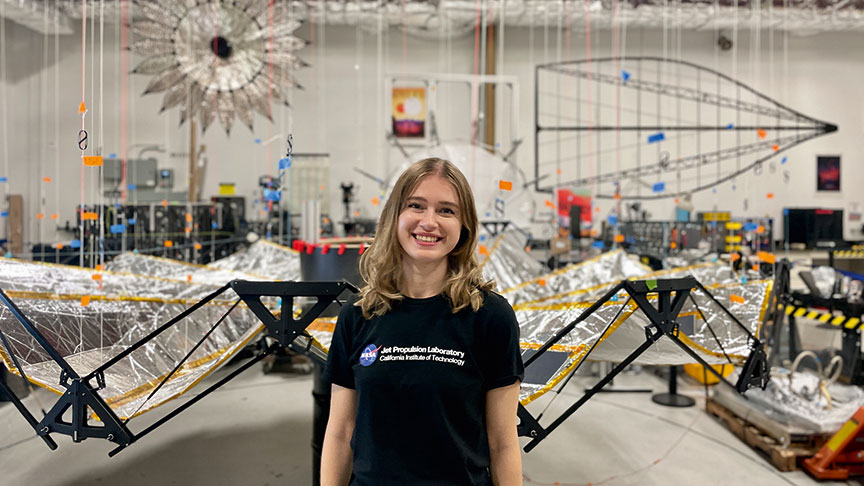
Besides her work, Stankiewicz also spends five hours a week at figure skating training: “That’s my great passion, and something I discovered while at university in Munich.” Her volunteering work is also very important to her. Even as an undergraduate, she was committed to getting schoolchildren interested in the STEM subjects. In 2025, she managed to launch a scholarship programme herself: the “Pathfinder Fellowship” run by the Rafał Brzoska Foundation, which funded the lion’s share of her time at NASA, and by the Polish Space Professionals Association (PSPA). Each year, the programme enables three Polish students to spend time conducting research at JPL. Stankiewicz was involved in selecting the first fellows and used her contacts to place them with research teams in Pasadena. “I feel privileged to have received so much support myself, and would like to give something back,” she says.
And what are her plans once her traineeship ends? “I’m going to spend a year travelling the world. Then I’d like to work in the US, preferably at one of the private space companies that build and test space stations and landers.” She’s already got the Green Card to do so in the bag. ―