
Text: Nicola Kuhrt
Overview
Space acquires a strategic dimension – and Germany repositions itself
How space policy, international partnerships and DAAD funding are interlinked.
Issue 1 | 2026
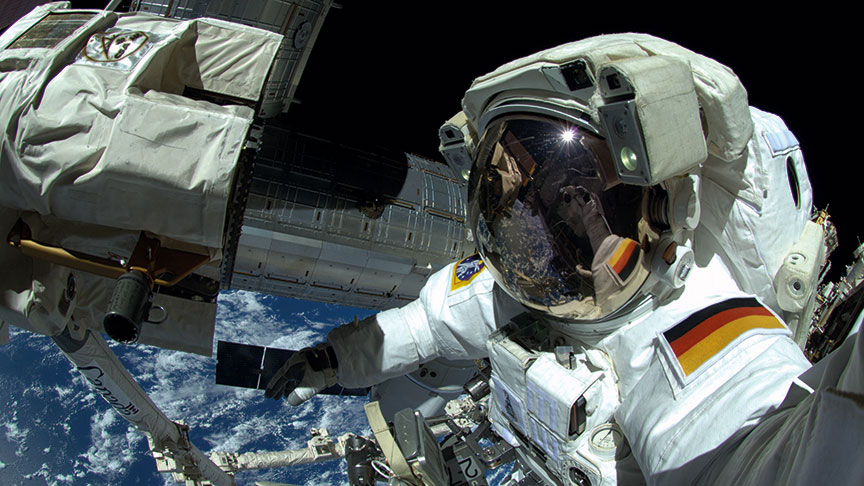
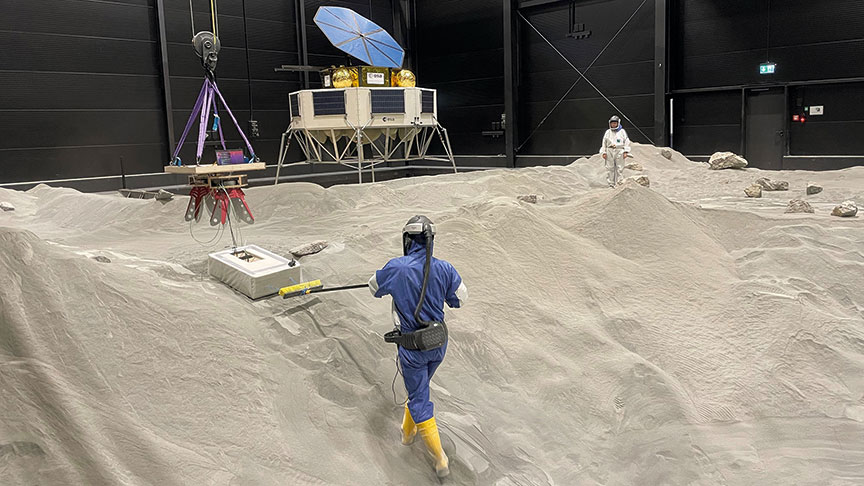
Space is moving into the forefront of political attention. Long considered a field of research with little relevance to everyday life, it has now come to be seen as critical infrastructure and an engine of innovation – not to mention an arena of geopolitical tension. Accordingly, the German Federal Cabinet adopted the country’s first Space Safety and Security Strategy in November 2025 and, when the new government was formed last May, the Federal Ministry for Education and Research had its name changed to include “Technology and Space” to reflect this new outlook. In Cologne, the German Aerospace Center (DLR) and the European Space Agency (ESA) opened Luna, a globally unique moon facility that underlines Europe’s ambitions: space is no longer simply a metaphor for the future, but very much an integral part of what is happening in the world today.
The DAAD: building bridges in space research
As policymakers and space agencies scramble to reposition themselves, the DAAD’s focus when it comes to space research and exploration is on a key interface between global science, early-career funding and international cooperation. Numerous programmes are open to those engaged in these fields – with everything from individual funding in STEM subjects such as aerospace technology, IT and engineering to structured research formats.
„Space is no longer simply a metaphor for the future, but very much an integral part of what is happening in the world today.“
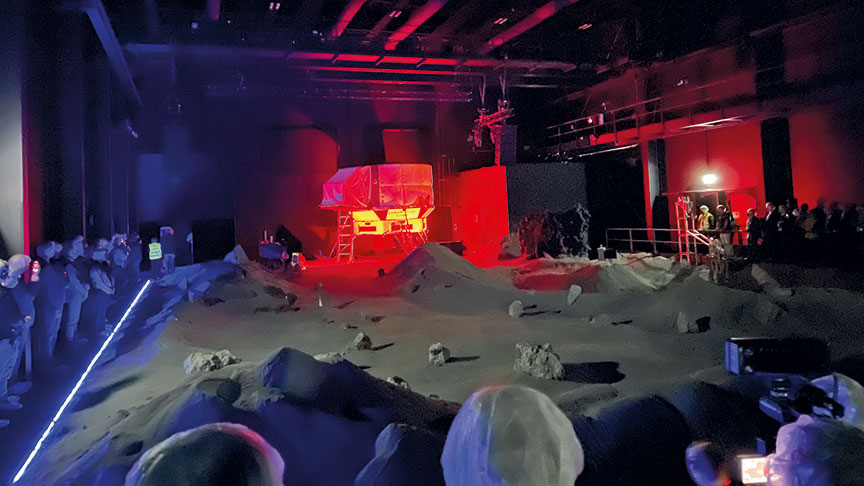
One of these is the DLR-DAAD Research Fellowship Programme, which funds stays at DLR institutes for early-career researchers. Around 120 fellows receive funding annually, with 50 to 60 new ones joining the programme each year. Funding is available for research fields such as satellite technology, navigation, quantum error correction and battery technologies for moon missions. Coordinated by the DAAD and DLR, the programme plays a key bridging function when it comes to internationalising German space research. The Oberpfaffenhofen facility near Munich, which specialises in radar and navigation technologies, is particularly popular with the programme’s fellows.
Another example is the double doctoral degree in astrophysics (DDAp) run jointly by the Karlsruhe Institute of Technology (KIT) and the Universidad Nacional de San Martín in Buenos Aires (see p. 23). The degree course is funded by the Argentine-German University Centre (DAHZ) and thus by the DAAD. Embedded in the work conducted at the Pierre Auger Observatory, one of the world’s largest centres for astroparticle experiments, it has been providing young scientists with a programme of binational education since 2015 – including at least one year spent researching in the partner country and leading to a double doctoral degree qualification. With around 20 alumnae and alumni and currently 15 doctoral students, the programme is a prime example of successful international cooperation in higher education.
DWIH worldwide: discourse on space
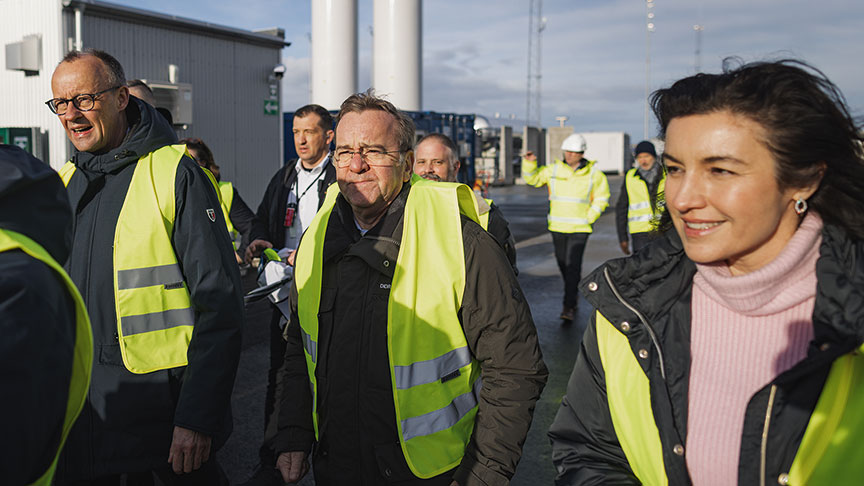
The German Centres of Research and Innovation (DWIH) are also shining the spotlight on the topic of space in 2026. Along with its partners, the DWIH New York staged a transatlantic symposium entitled Next Frontiers in May 2026. Two of its sessions focused directly on space: The Outer Space Frontier shed light on the role that space-based data plays in climate and environmental research, while The Space Ethics Frontier discussed who owns the moon – and the central legal norms that will govern a new era of lunar missions. The symposium made it quite clear how science diplomacy and future technologies need to be considered jointly.
In 2026, the DWIH New Delhi is taking part in the international INNOspace Masters competition that promotes innovation at the interface between space research and practical applications. Through its institutional cooperation with DLR Tokyo and the Japanese Aerospace Exploration Agency JAXA, the DWIH Tokyo is particularly involved in this topic. Back in 2023, a series of events highlighted how space debris can be avoided.
In 2026, the planned MMX Martian Moons Exploration mission will be taking centre stage, for which DLR has once again developed a rover for explorations on Phobos, one of Mars’ two moons. The DWIH Tokyo will be focusing on the mission in expert events, panel discussions and networking formats designed to bring researchers, space agencies and political actors from both countries together and further intensify German-Japanese cooperation in space research.
Security and economic dynamism
Space exploration is an important research field of the future, but one that is forcing Europe to realign itself in the global context. The ESA needs to develop a new strategy to take account of security challenges, major scientific programmes and increasingly commercialised space travel. International partners such as NASA are under pressure due to massive budget cuts, while China, India and emerging space nations such as Brazil and Norway are building their own capacities. At the same time, orbital systems for navigation, communication, climate research, agriculture and finance are becoming ever more important. Space has become critical infrastructure – and thus politically sensitive.
Satellites are indispensable nowadays for military communication, reconnaissance, navigation and early warning systems, yet this also makes them potential targets in geopolitical conflicts. Germany’s response is also institutional in nature: ever since the German Space Command was established in 2021, space has officially been defined as a military dimension in its own right. The German Space Command is responsible among other things for analysing threats in space, protecting satellite-based systems and securing Germany’s ability to act in space. As such, space is not only a research domain and economic area, but part of the security architecture of any modern state.
At the same time, space exploration and travel is gaining huge economic importance. “New Space” is the buzzword, with private companies, start-ups and new business models pushing ahead with the commercialisation of space. At the ESA Ministerial Council Meeting in Bremen in 2025, member states approved the agency’s highest-ever three-year budget of 22.1 billion euros. Germany remains the largest contributor and significantly increased its share. The funding is used for example to pay for new launcher systems, satellite communication, navigation and dual use programmes that combine civilian and security applications. Space exploration and research is viewed more and more as an investment in competitiveness, technological sovereignty and value creation.
Japan in focus: missions and partnerships
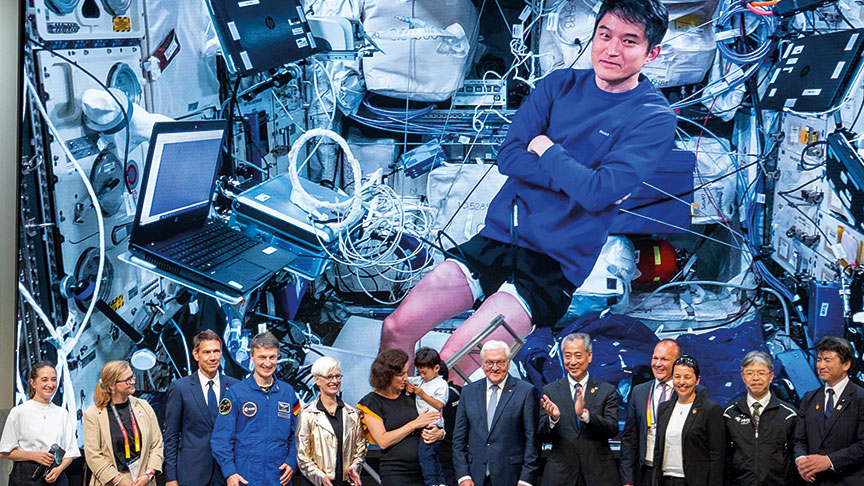
Geopolitical shifts are also influencing cooperation agreements. While space collaboration between Western nations and Russia has essentially come to an end and the US is becoming increasingly inward-looking, the Germany-Japan axis is gaining strategic significance. This was demonstrated by the trip to Japan undertaken by Federal President Frank-Walter Steinmeier and Research Minister Dorothee Bär in June 2025, which was aimed at reviving German-Japanese cooperation – especially in space-related projects. The trip culminated in a visit to Expo 2025 in Osaka, which revolved around issues of future global relevance ranging from technology and sustainability to space travel. During a dedicated Space Day, the German delegation highlighted scientific and technological partnerships in space travel.
Germany and Japan share democratic values, similar challenges – and common interests in space. As ESA astronaut and DAAD alumnus Matthias Maurer stressed at Expo 2025 in Osaka, Japan and Europe could “achieve a lot more if we positioned ourselves better”. The bilateral space agreement, which is now to be renewed, is a visible sign of this new strategic relationship.
Space has evolved to become a political, scientific and economic arena of vital future importance – and Germany is repositioning itself. International cooperation is becoming ever more important, above and beyond conventional diplomacy. In this context, the DAAD is actively shaping concrete international collaboration by funding academic mobility, training early-career scientists and bringing research institutions together across national borders. In so doing, it is creating networks that pave the way for lasting cooperation in space research. —
Borderless research: pathways into the space sciences
Space research has long since ceased to be solely physics-based. Anyone wishing to unravel the mysteries of the universe these days will find excellent conditions in three main subject areas in Germany: in the natural sciences, (astro)physics, chemistry and biology form the basis for studying the evolution of planets or extraterrestrial life. Engineers – in fields ranging from aerospace technology to robotics – develop things like the probes and rovers required for future missions. One growing field is biomedicine, which explores how humans are affected by the absence of gravity. Many other specialist fields also play their part in space research – as you will discover in the portraits in this edition.