
Text: Carola Hoffmeister
Keeping in touch
“Cooperation comes about when people remain in dialogue”
For 55 years, the DAAD Regional Office New York has been promoting stable relations between Germany and North America. With its sights set firmly on the future, its anniversary year will also be celebrating science and space.
Issue 1 | 2026
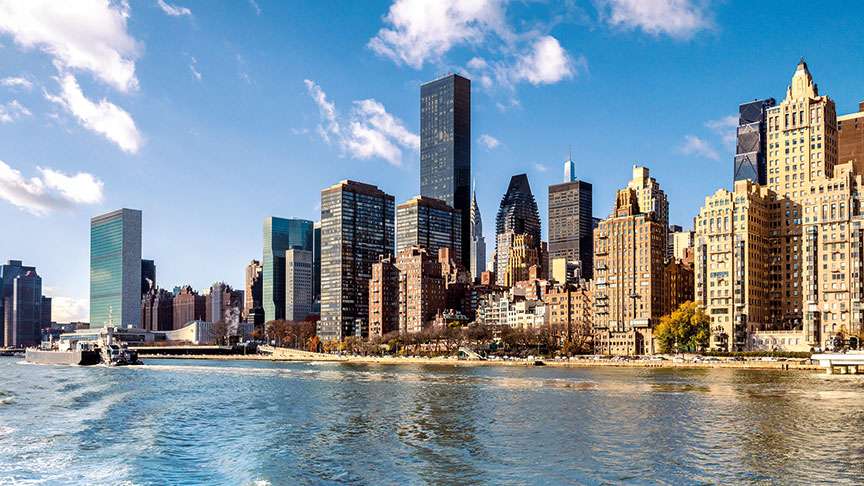
The flags of 193 countries flutter gently in the wind outside the headquarters of the United Nations on the East River. Christian Strowa, director of the DAAD Regional Office New York, passes them almost every day on his commute to work from Brooklyn to Manhattan. Just a few steps further along, the German House at United Nations Plaza is home to the Regional Office New York. It is here that Strowa and his team of 13 colleagues coordinate programmes for the USA and Canada and supervise collaborations between universities on both sides of the Atlantic. “It is truly a privilege to be here just now,” he says. “We are experiencing a crucial phase in transatlantic cooperation.”
The Regional Office was established in 1971 and is celebrating its 55th anniversary in 2026. It supports academic exchange between Germany and North America – everything from research collaborations and scholarships to institutional partnerships.
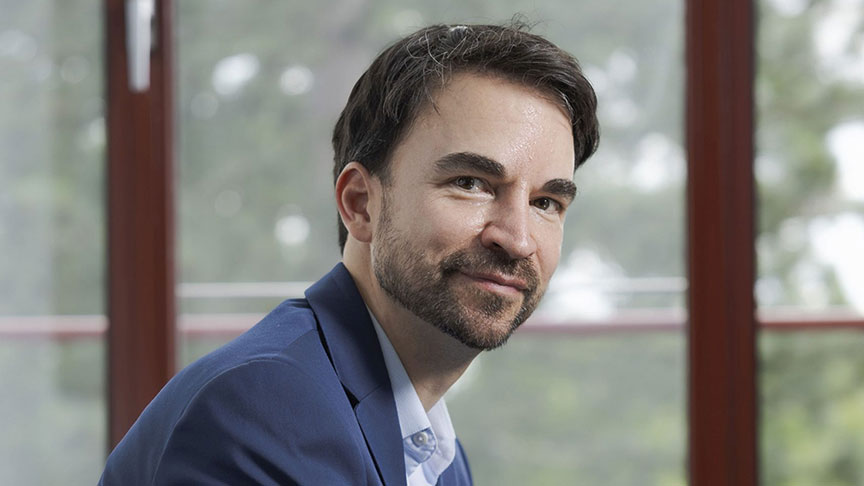
Conversations are increasingly important
When Strowa took over as director in 2024 the situation appeared stable at first. But things changed when Donald Trump was re-elected president. These days, many conversations address concrete questions: Are cooperative ventures still plannable? Will international researchers still be able to work in the US without any problems? “I say they will – and encourage anyone interested in embarking on a research stay in the US to keep pursuing their project,” explains Strowa.
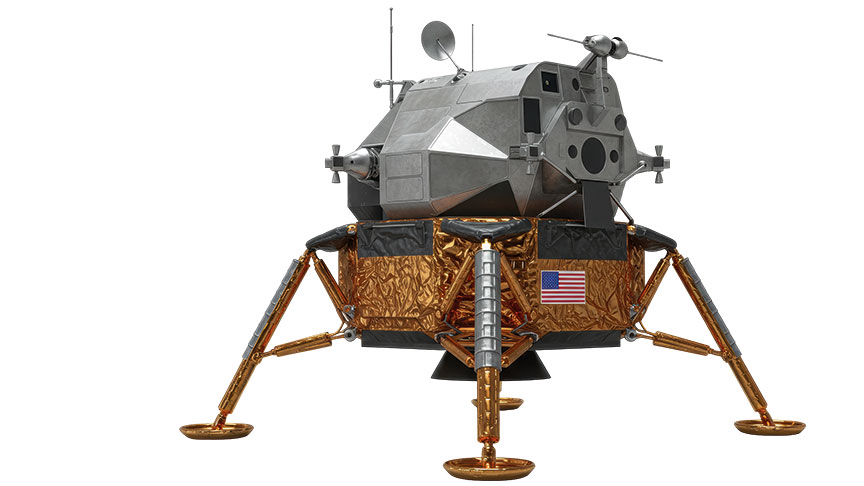
Space is one of the topics the Regional Office will be focusing on in its 2026 anniversary year. Together with the German Center for Research and Innovation (DWIH) New York, of which Strowa is also the director, various space-related events are planned for 2026, the aim being to bring actors from science, policymaking and innovation funding together. “Hardly any other research field relies more heavily on international cooperation than the exploration of space,” says Strowa. “We are keen to emphasise this.” Space research is one of the main areas where the objectives of Germany’s High-Tech Agenda align with the R&D priorities of the White House.
The Regional Office network includes people such as the NASA astronaut instructor and DAAD alumna Grier Wilt and the astrophysicist John Horack, who is vice president of Ohio State University and holds the Neil Armstrong Chair in Aerospace Policy. Furthermore, many alumni and alumnae who came to Germany or went from there to the US on a DAAD scholarship now occupy senior positions in science and continue to feel strongly committed to transatlantic exchange.
Political tensions have always had an impact on the work of the Regional Office. When it was established in 1971, the world was in the midst of the Cold War. Academic exchange was seen as a way of keeping channels of communication open – even when political relations were fraught. “Essentially, we find ourselves in a similar situation today as far as the role of science and academia is concerned,” says Strowa. “And our unequivocal response to this is: now more than ever!”
“We are experiencing a crucial phase in transatlantic cooperation.”
These days, academic exchange is more about getting people together face-to-face, which is why Strowa spends much of his time travelling to universities, conferences and partner institutions. Taking advantage of the Germany Research and Innovation Tour (GRIT), the German academic and scientific organisations represented in the USA are working together – under the auspices of the German Embassy – to highlight existing funding opportunities and explore new scope for cooperation. There continues to be considerable interest in international cooperation, also in Republican states, says Strowa. He explains that Texas and Florida have made concrete enquiries about continuing and expanding transatlantic cooperation. Such cooperation can have a stabilising influence, especially in politically tense times – so long as the exchange doesn’t break down. Science diplomacy describes the bridge-building role that academics play beyond the political arena. Nowadays, science diplomacy also means embedding scientific and academic issues to a greater extent in social and cultural contexts. To this end, the DAAD and the DWIH New York are trialling new formats. For example, a cinema was hired for a screening of Werner Herzog’s documentary “Theater of Thought” about the mysteries of the human brain – along with a scientific lecture to accompany the film. Another event was devoted to the subject of “Hearing Health in Nightlife”; it addressed neuroscientific research into the impact of high volume in the context of Berlin’s internationally renowned club culture.
The goal is not only to forge new contacts at established universities but also to reach out to a wider audience – for instance in US states that were not previously so much in focus. At the same time, exchange is being more closely linked to business and the start-up scene. Programmes such as RISE, which awards grants for research internships in Germany, or the STEP USA University Program for university-based start-ups bring students, researchers and young companies together and open up new opportunities for transatlantic cooperation.
New USA Advisory Service
Against this backdrop, the DAAD USA Advisory Service set up in 2025 is also becoming increasingly important. It is a joint project of the Regional Office, the DAAD Info-Center, the DAAD Information Center San Francisco and the Centre for International Academic Cooperation (KIWi). Originally aimed at students and researchers from Germany planning a stay in the US, it now increasingly facilitates exchange in both directions: international early-career academics can obtain information here about ways of spending time in Germany – from summer schools and internships to their next career steps in research or innovation. This is breathing new life into transatlantic exchange, says Strowa.
For 55 years, the Regional Office New York has been helping create connections and ensure their continued impact. Or, as Strowa puts it: “Cooperation comes about when people remain in dialogue.” ―
Have you ever heard of Grier Wilt? A DAAD alumna, she works as a spacewalk flight controller at NASA and prepares astronauts for missions in space. In this video she gives insights into her fascinating work at the Johnson Space Center in Texas. Why not take a look!